

The modern construction environment faces increasing challenges related to water and moisture—from unpredictable weather conditions and increased atmospheric loads to structural defects and the natural aging of materials. All this makes water control not just a technical detail, but a key factor for the sustainability of any building.
Water does not destroy a structure instantly. It acts gradually—penetrating, accumulating, weakening the bonds between materials, and creating systemic problems over time.
Moisture in walls and foundations is not a cosmetic issue. It leads to reinforcement corrosion, splitting and cracking of concrete, degradation of mineral materials, and accelerated aging of construction elements.
The causes can vary—surface leaks, capillary moisture ingress, constant contact with water, or prolonged hydrostatic pressure in underground sections. Regardless of the source, the result is the same: the weakening of the structure over time.
These are not defects that can be resolved with cosmetic repairs. These are structural risks.
Sheet waterproofing and roll membranes often work under “ideal conditions”—dry substrates, absence of residual moisture, precise execution, and full process control.
In the reality of construction sites, especially during renovation, these conditions are rarely present. There is often residual moisture, compromised layers, complex details, and limited time for execution.
Traditional systems require perfect preparation. Modern sites rarely offer it.
A barely noticeable leak from a roof or terrace can be a sign of accumulated moisture behind surfaces, which leads to serious structural problems over time. Sometimes the consequences manifest years after the initial execution.
In practice, water rarely appears where we expect it. Sometimes the problem starts from a terrace, other times from a roof or an underground section. In reservoirs and technical rooms, the requirements are even higher, as full water tightness and long-term durability are required.
The common factor in all these situations is one—when water finds a way, the problem is almost never local. It is systemic.
Today, liquid waterproofing is not sought “by the catalog.” It is sought when standard solutions are no longer sufficient or applicable.
In terraces and balconies, there is often moisture under the tiles, compromised screed, and active details around drains and edges. Full dismantling is not always economically justified, and moisture is already part of the structure.
In flat roofs, problems accumulate over time—old membranes, complex connections, UV loading, and standing water. In these cases, a seamless liquid system allows for restoration and protection without destroying the entire roof package.
Underground sections and foundations are among the most difficult areas to control. Capillary moisture and constant water pressure require materials that do not just cover the surface but work against the water.
In industrial and technical zones—garages, parking lots, reservoirs—mechanical resistance is necessary in addition to water tightness. There, compromise is not acceptable.
Liquid waterproofing systems create a seamless membrane that follows the actual geometry of the surface. They cover complex details, eliminate joints, and minimize the risk of weak points.
In many cases, they can be applied over existing flooring, old membranes, concrete, or metal structures, making them adaptable to the actual conditions of the site.
This is not just an alternative product. It is a different approach to the problem.
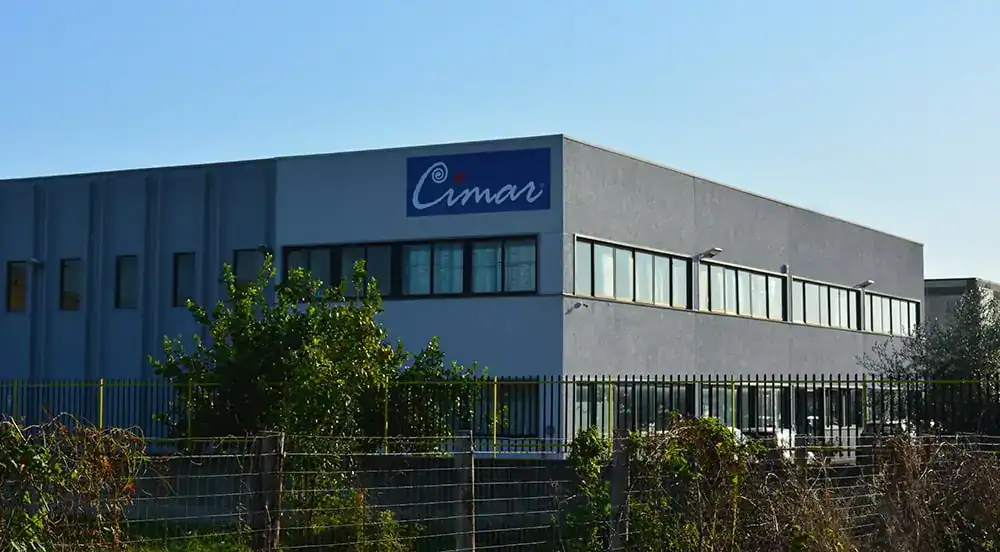
In this context, Cimar Produzione logically emerges—an Italian manufacturer that builds its philosophy on solving real, often compromised situations.
The company does not offer “one product for everything.” It develops systems tailored to different scenarios—residential and industrial construction, roofs and open areas, underground structures, and technical facilities.
The common thread among them is the systemic approach—substrate preparation, proper adhesion, membrane selection, mechanical resistance, and long-term performance over time. Product development is linked to laboratory testing and European certifications, with a focus on real-world operation.
As the direct representative of Cimar for Bulgaria, EuroMax integrates this systemic approach into local practice.
This means choosing the correct system according to the specific problem, technical consultation, and adaptation to climatic and structural conditions. The approach is not a universal recipe, but a professional logic based on the actual requirements of the site.
The goal is long-term water control, not a temporary solution.
EuroMax is launching a new partnership aimed at expanding the portfolio of liquid waterproofing systems.
More solutions for terraces and balconies, roofs, underground sections, and industrial applications will soon be available on the site. In the next publication, we will present the specific systems and their technical advantages, as well as when each solution is most appropriate.
Water control is not a finishing stage.
It is a strategic decision for sustainable construction.