
The modern city is becoming increasingly dense, and buildings are increasingly mixed-use – residences above shops, offices next to apartments, hotels, gyms, commercial spaces, schools, and kindergartens in a shared environment. This means one thing: comfort no longer depends solely on aesthetics and materials, but also on having impact sound insulation within the structure.
Increasingly, the end user expects not just a good-looking space, but an environment where they can live, work, and rest without constant disturbances. This is where acoustics begin to play a key role and become a real criterion for quality.
One of the most serious and underestimated problems is impact noise – footsteps, running, moving furniture, falling objects, carts, equipment, and vibrations that pass through the floor and are felt in adjacent or lower rooms. This noise is among the most irritating because it is not just heard but felt as a constant disturbance in daily life.
Unlike airborne noise, which can be limited by mass and density, impact noise is transmitted directly through the structure. This makes it harder to control, especially if it is not planned for at the design stage. Recent research confirms that heavy and low-frequency impact noise is among the most difficult to manage – but with a correctly chosen system, the improvement is clearly perceptible. This is precisely why you should choose impact sound insulation.
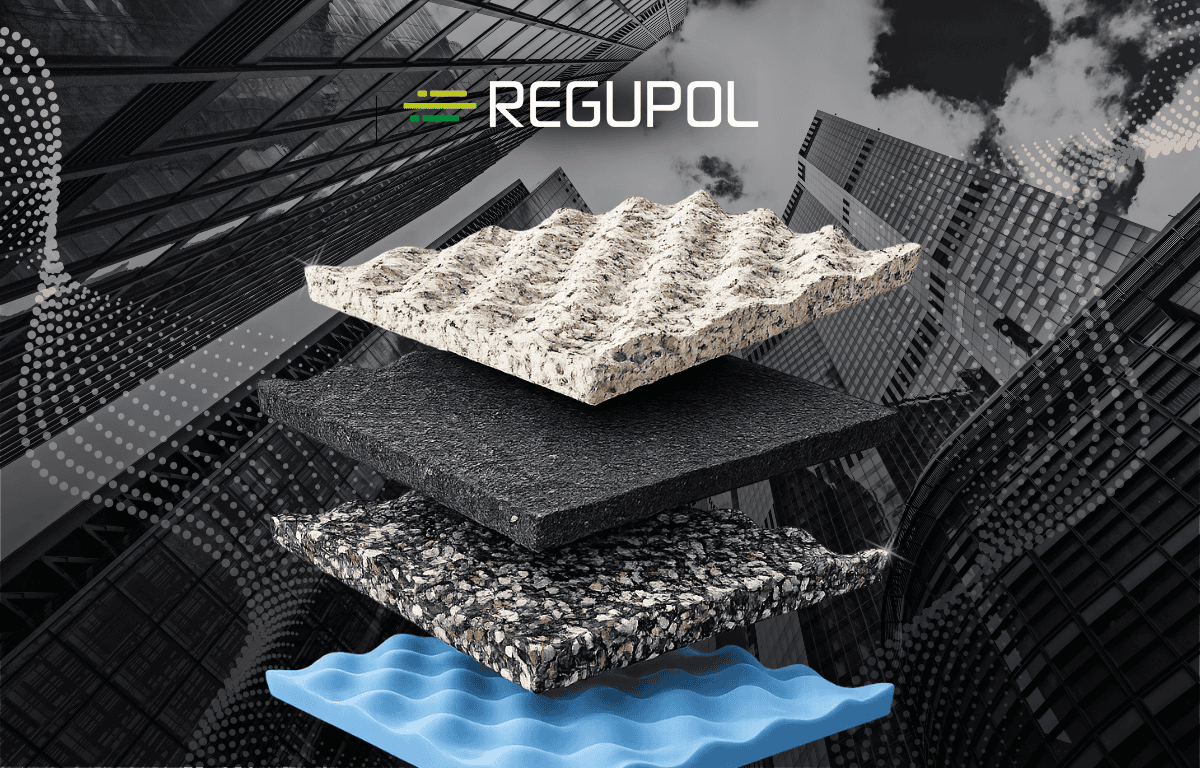
The material acts as an elastic spring between the structure and the upper floor package. Instead of energy from footsteps, impacts, and movement passing directly into the slab, it is absorbed and dampened in the elastic layer.
This principle is the basis of the so-called “floating floor” – a system where the final floor has no rigid connection to the load-bearing structure. This allows for a significant reduction in the transmission of vibrations and impact noise.
When such a system is missing, the floor becomes a rigid sound bridge. The result is familiar:
Today, we increasingly have mixed-use buildings, limited structural heights, renovations, timber structures, underfloor heating, and high comfort requirements. People spend more and more time in enclosed spaces – acoustic comfort is no longer a luxury, but a factor directly affecting quality of life.
Impact sound insulation is used in:
Wherever different people and functions coexist within a single structure, good acoustics are what make the environment truly comfortable.
This is the key question because not every situation requires the same solution.
Under screed – the solution becomes part of the floating floor and is preferred for new construction or major renovations when the structure allows for the creation of a complete floor package with higher acoustic performance.
Under final flooring – the insulation is placed directly under the final covering: parquet, vinyl, wood, or ceramics. Suitable for renovations, limited structural heights, and situations without a new screed.
The right choice depends on the load, the type of flooring, and the expected result. Therefore, universal solutions rarely provide optimal effects. This is where REGUPOL stands out – offering not just one product for everything, but different systems according to the specific application.
REGUPOL sonus core is a practical solution for limited structural height. Suitable under final flooring and in certain systems – under screed. It provides good acoustic protection at a low thickness, making it an excellent choice for apartments, hotels, offices, and renovations.
REGUPOL sonus multi is an under-final-flooring solution for a wide range of applications. A thin, universal, and reliable underlay with good acoustic performance, suitable for homes, offices, hotels, and renovations when a balance between height, comfort, and budget is needed.
REGUPOL comfort is an under-screed series for standard loads up to 5 kN/m², available in thicknesses of 5, 8, and 12 mm. A reliable line for residential buildings, renovations, and projects seeking a secure balance between thickness, acoustics, and budget.
REGUPOL sonus curve is an under-screed solution for a higher level of acoustic performance in specific systems. It provides an additional step in the selection process and demonstrates an important feature of REGUPOL – the brand thinks in systems, not single products.
REGUPOL sound / REGUFOAM sound are developed for heavier applications: high-traffic buildings, shops, carts, service areas, gyms, and mixed-use functions where standard solutions are insufficient.
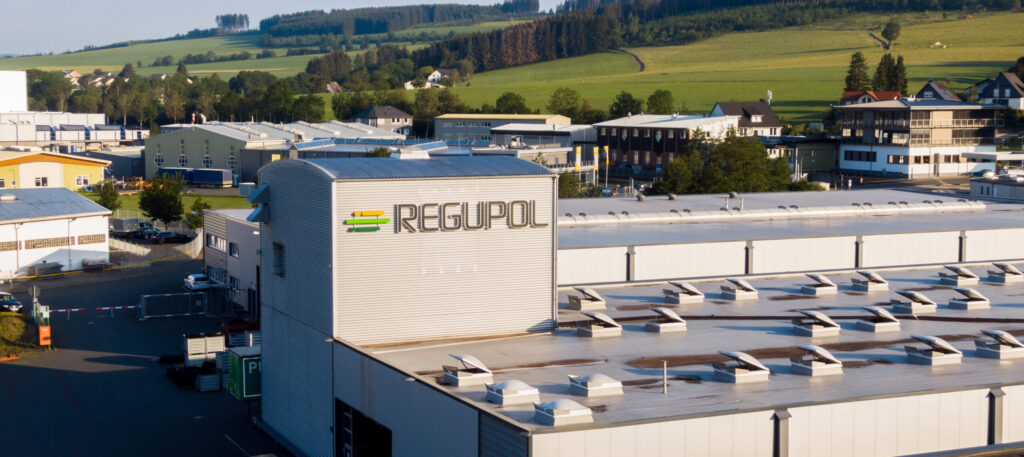
REGUPOL is an established international name in acoustic solutions, founded in 1954, with a presence in over 132 countries. The brand’s strength lies in its systemic approach – different materials, different thicknesses, and different solutions for different applications. An apartment, a hotel, a high-traffic shop, and a kindergarten should not be addressed with the same membrane.
At Euromax, we view impact sound insulation not as a simple material, but as a solution for a higher-quality building and real comfort.
We work with REGUPOL and offer under-screed and under-final-flooring solutions tailored to the specific needs of each project. A key principle applies to us: installation accounts for about 80% of the final result. Even the highest quality material can be compromised by incorrect execution.
That is why, in addition to products, we provide guidelines for correct application – because the final result depends on the entire system: material, construction, and execution.
Do you have a specific project or a question regarding system selection? Contact us.
What is the difference between impact and airborne noise? Airborne noise travels through the air – voices, music, TV. Impact noise is transmitted directly through the structure – footsteps, moving furniture, vibrations. Impact noise is harder to control and requires a special sound insulation system under the floor.
Is a floating floor mandatory in a new building? Regulatory requirements vary, but practically – in mixed-use and multi-story buildings, a floating floor is the standard for ensuring acoustic comfort between floors.
Can sound insulation be added during renovation? Yes. Under-final-flooring solutions like REGUPOL sonus core and sonus multi allow for effective impact sound insulation even during renovation, without the need for a new screed.